
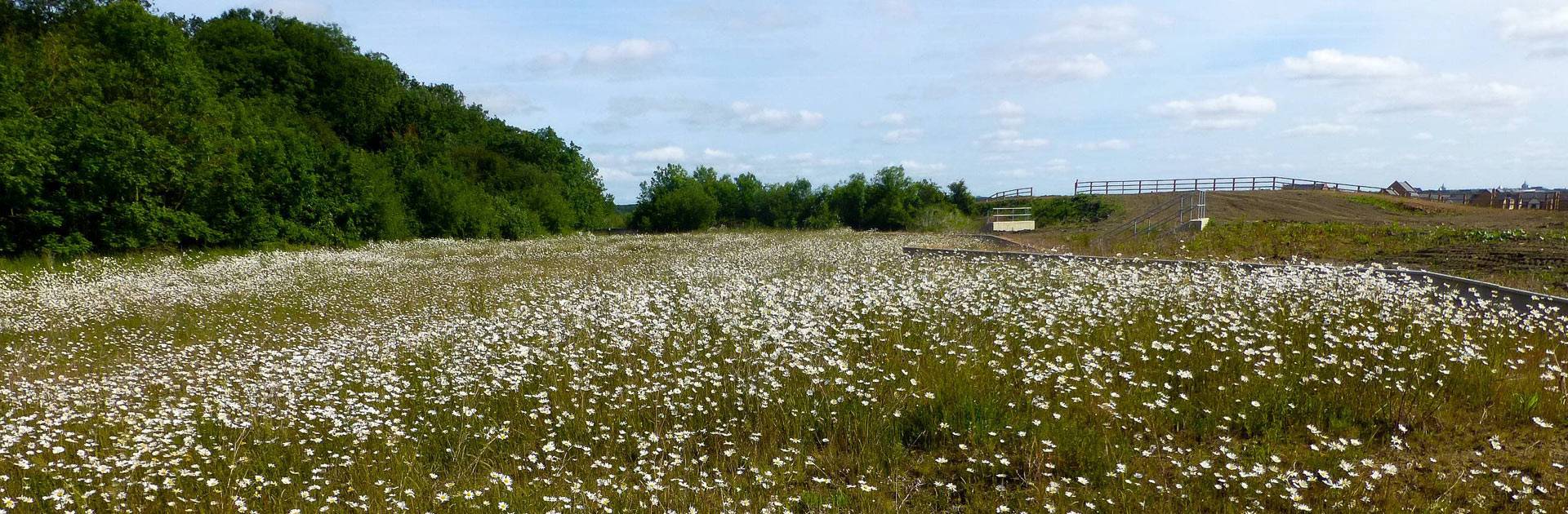
BSG Ecology has a wealth of experience of biodiversity gain (also known as biodiversity net gain) from many projects throughout England, including brownfield reclamation, residential, minerals and waste and commercial/retail developments. We have helped clients deliver biodiversity gain assessments since 2013, as part of Defra’s first series of trials.

What is Biodiversity Gain?

Government guidance describes biodiversity net gain (BNG) as “a way of creating and improving natural habitats. BNG makes sure development has a measurably positive impact (‘net gain’) on biodiversity, compared to what was there before development.”   (www.gov.uk)

In practice, biodiversity net gain refers to development that gives rise to a positive effect through avoiding impacts or mitigating harm to biodiversity, specifically in relation to habitat features, and then delivering improvements through habitat creation or enhancement.

The legislation and policy

The Environment Act received Royal Assent in England in November 2021; this introduces a requirement to deliver biodiversity gain for developments in England. There is a transition period before mandatory biodiversity gain becomes law (in January 2024).

The National Planning Policy Framework (NPPF) refers to biodiversity gain. Paragraph 179 states that “To protect and enhance biodiversity and geodiversity plans should: … b) … identify and pursue opportunities for securing measurable net gains for biodiversity”; Paragraph 180 states that “When determining planning applications, local planning authorities should apply the following principles: … opportunities to improve biodiversity in and around developments should be integrated as part of their design, especially where this can secure measurable net gains for biodiversity…” This is current national policy in England. Some local planning authorities in England already have biodiversity gain policies within their Local Plans, although the approach taken currently varies.

During the current transition period, local planning authorities are increasingly requiring the measures set out within the Environment Act as part of their development decision making process.

The Environment Act’s Biodiversity Gain Requirements:

  • Developers must deliver 10 per cent biodiversity gain through their schemes; this will be measured through the statutory Biodiversity Metric.
  • A biodiversity gain plan will be needed to demonstrate how the gain will be delivered, on and or off-site.
  • Developers will have to guarantee the biodiversity gain for 30 years.
  • New “local nature recovery strategies” will be prepared throughout England by “responsible authorities” to encourage habitat creation and enhancement in the right places.

  • If they cannot deliver biodiversity locally, developers will have to buy “biodiversity units”.
  • Conservation covenants will be a mechanism used to deliver this (this approach is in preparation by Defra and Natural England).
  • A national register of land used for biodiversity gain will be established; this will involve setting up a new biodiversity credits market.

Biodiversity Gain Capability

We have a thorough understanding of the policy basis for biodiversity gain in England, how this currently varies across the country, the application of the Biodiversity Metric, and options for delivering biodiversity gain.

We have experience in biodiversity gain assessment throughout the practice and can provide advice and support at all stages of a project:

For clients with significant landholdings, we can undertake an audit of the biodiversity gain potential to help plan future developments strategically to optimise biodiversity gain return and identify opportunities to sell back biodiversity credits to the emerging local and national site register.

Project Feasibility

  • Identifying implications for potential development projects.
  • Audits of land for biodiversity gain capacity at acquisition stage, akin to risk assessment or due diligence.
  • Advice on options for delivery of biodiversity gain on and off-site.

Assessment and design

  • Baseline survey and habitat condition assessment to provide data for the biodiversity metric.
  • Design-phase input: advising on the retention of ecological features, scope for habitat creation and enhancement.
  • Combining green infrastructure, SANG and habitat provision.
  • GIS expertise: managing metric data and supporting calculations.

Planning consent and delivery

  • Liaison and negotiation with local authorities, conservation organisations, and other third parties for agreeing the delivery of biodiversity gain.
  • Planning conditions/obligations: working with a project team to ensure that the proposed requirements are reasonable, proportionate and practical.
  • Preparing long-term site management plans and advising on future management commitments.
  • Site-based advice and expertise in working with contractors to advise on habitat creation, restoration and enhancement.